The Pharmacist’s Guide to OTC Meds for Your NYC Apartment | CityMeds Pharmacy
If I live in a New York City apartment, I do not want my first plan for a headache, a minor cut, an allergy flare-up, or an upset stomach to be “run out and buy something later.”
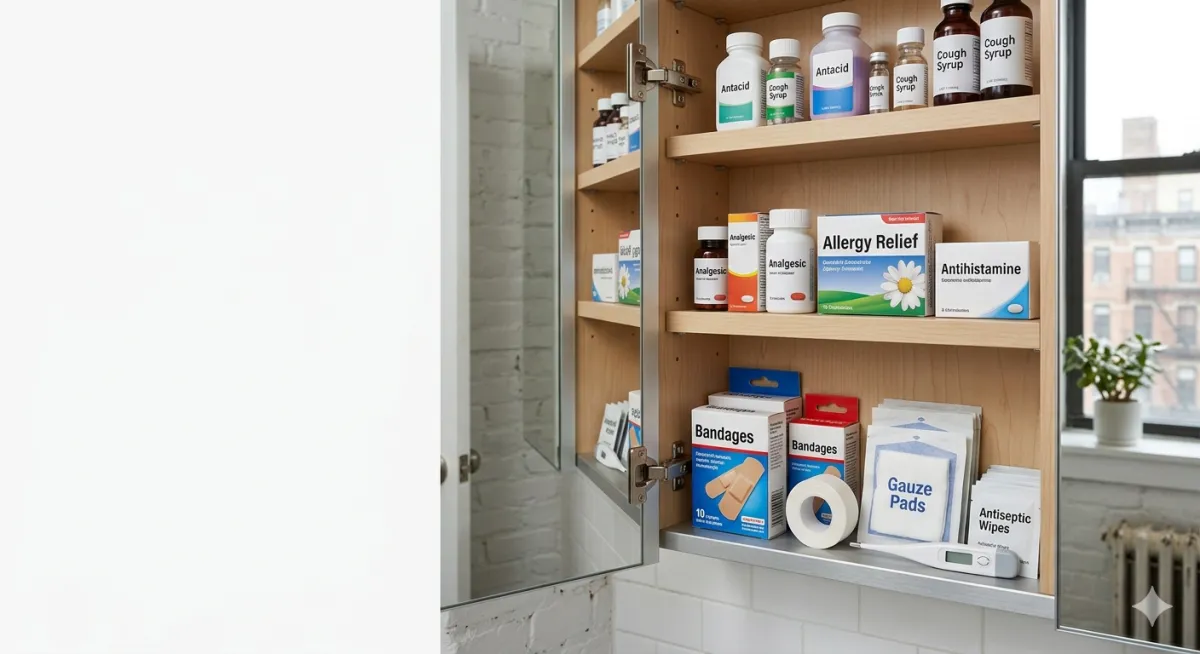
That is exactly how small health problems turn into bigger hassles in the city. A well-stocked apartment medicine cabinet is not about panic-buying. It is about being prepared for the everyday things that happen in real life: a fever at 11 p.m., a scraped knuckle while unpacking groceries, seasonal congestion, a stomach issue before work, or a minor burn in a tiny apartment kitchen. Johns Hopkins lists common first-aid kit medicines such as acetaminophen, antacid, antidiarrheal medicine, antihistamine, decongestant, hydrocortisone cream, and ibuprofen, along with basics like antibiotic ointment. MedlinePlus also says every home should keep a well-stocked first aid kit in one known location.
For the Bronx, that kind of everyday readiness fits CityMeds Pharmacy naturally. The pharmacy’s website says it serves the community from 730 Courtlandt Ave, Bronx, NY 10451, offers medication consultations, vitamins & supplements, health screenings, and free local delivery, and positions itself as a neighborhood health hub rather than just a place to pick up prescriptions.
Why does every NYC apartment need a real OTC setup?
Living in the city changes how I think about convenience.
If I am tired, sick, watching kids, working late, or trying not to drag myself out in bad weather, a missing bottle of fever reducer suddenly feels like a much bigger problem than it should. That is why I think of over-the-counter medicine Bronx shoppers should keep at home as a practical apartment essential, not an extra expense. The FDA’s medicine-at-home education guide notes that people commonly use OTC medicines for headaches, fevers, stuffy noses, coughs, upset stomachs, and allergies.
And once I stop thinking about OTC meds as “random purchases” and start thinking of them as part of a home first aid kit, the setup becomes much easier to build.
Start with the “must-have” pain and fever basics
If I had to name the first category every apartment should have, it would be pain and fever relief.
Johns Hopkins includes acetaminophen and ibuprofen on its basic first-aid list, and Mayo Clinic also lists pain relievers among the medications that belong in a home first-aid kit.
These are the kinds of items I want on hand for:
headaches
minor body aches
fever
common cold discomfort
simple sprains or strains
This does not mean I should take them casually or ignore label directions. It means I do not want to be stuck without a basic option when something routine comes up.
Since CityMeds lists pharmacist consultations, there are questions about safe OTC choices and medication plans, so visit the Services Page.
Allergy medicine belongs in the cabinet even before allergy season gets bad
A lot of Bronx residents do not think about allergy medicine until they are already sneezing and rubbing their eyes.
That is too late for a lot of people. Johns Hopkins includes antihistamine and decongestant in a standard first-aid kit, and the FDA’s at-home medicine guide also identifies allergies and stuffy noses as common reasons people use OTC products.
That is why my checklist would absolutely include:
a basic antihistamine
a congestion-relief option if appropriate
tissues and hydration support nearby
This also fits CityMeds’ own local content. The pharmacy’s March 2026 Bronx allergy blog says seasonal symptoms are already a real issue in the borough and encourages people not to wait until pollen fully hits.
Stomach and digestive relief are some of the most underrated apartment essentials
A lot of people remember cough medicine before they remember what helps when their stomach is the problem.
But if I am building a realistic city-apartment medicine cabinet, I want something for:
heartburn or acid discomfort
mild diarrhea
nausea-related travel or food upset support
basic stomach irritation
Johns Hopkins lists antacid and antidiarrheal medicine as first-aid-kit basics, and Mayo Clinic includes antacids and anti-diarrhea medicine on its recommended list too.
These are the medicines people often end up needing suddenly, usually at inconvenient hours.
Skin-relief items matter more than people think
A good apartment medicine cabinet should also be ready for the smaller skin problems that happen all the time.
That includes:
bug bites
mild rashes
itching
small burns
scrapes
Johns Hopkins lists hydrocortisone cream, calamine lotion, antibiotic ointment, and antiseptic ointment among common first-aid essentials. Medline’s first-aid overview also highlights alcohol wipes, antibiotic ointment, burn ointment, and related topical basics.
This category is easy to overlook until I need it immediately. Then it suddenly becomes the most important shelf in the apartment.
Every apartment should have a real wound-care section, not just one loose Band-Aid
This is where a home first aid kit becomes more than a few medicine bottles.
The Red Cross recommends first-aid basics such as adhesive bandages, absorbent compress dressings, and adhesive cloth tape, while MedlinePlus says a home first-aid kit should include supplies to treat common injuries and emergencies.
So my wound-care shelf would include:
adhesive bandages in different sizes
gauze pads or rolled gauze
medical tape
antiseptic wipes
antibiotic ointment
gloves if possible
tweezers
scissors
That is the difference between “I have something” and “I actually have a first-aid setup.”
Cold and cough meds still matter in a small apartment
Even if I do not want to overload the medicine cabinet, I still want something basic for common cold symptoms.
Mayo Clinic includes cough and cold medicines in its recommended first-aid-kit medication list, and the FDA’s home-medicine guide identifies coughs and stuffy noses as classic OTC-use scenarios.
That does not mean I need every syrup and tablet on the shelf. It means I should think realistically about the most common apartment-day misery:
nighttime cough
nasal congestion
sore-throat discomfort
mild feverish cold symptoms
Do not forget the tools, not just the medicine
One reason some home kits fail is that people buy the medicine but forget the basic tools needed to use it well.
MedlinePlus says a home first-aid kit should be organized in one location and stocked with both supplies and medications. The Red Cross list includes practical items like dressings and tape, and other standard first-aid recommendations often include thermometers, tweezers, scissors, and cold packs.
So beyond OTC medicine, I would want:
a thermometer
tweezers
small scissors
instant cold packs if space allows
hand sanitizer or wipes
a simple storage box or medicine bin
Because in a NYC apartment, organization matters almost as much as the product itself.
Apartment-specific essentials: think small-space reality
The best NYC medicine cabinet is not the one with the most stuff. It is the one that fits how people actually live here.
That usually means:
compact storage
clearly labeled items
keeping products in original packaging
checking expiration dates
storing them somewhere easy to find but away from moisture and kids
MedlinePlus says to keep supplies in one location so I know exactly where they are, and consumer health guidance commonly recommends replacing expired medicines and restocking regularly.
That is especially useful in apartments where bathroom storage is limited and kitchen cabinets get crowded fast.
When I would ask the pharmacist instead of guessing
A good OTC checklist does not mean I should self-manage everything blindly.
I would absolutely ask the pharmacist before choosing something new if:
I already take prescription medications
I have high blood pressure, diabetes, asthma, or other chronic conditions
I am shopping for a child or older adult
I am not sure which symptom category I am really treating
I have had reactions to OTC products before
This is where CityMeds Pharmacy’s positioning matters. The website repeatedly says pharmacists are available for one-on-one consultations, that the staff helps explain medications, and that the business is built around personalized neighborhood care.
My practical OTC checklist for a Bronx apartment
If I wanted the shortest, most useful version of this article, my starter checklist would be:
Medicines
pain/fever reducer
antihistamine
decongestant if appropriate
antacid
anti-diarrheal medicine
cough/cold relief
hydrocortisone cream
calamine lotion
antibiotic ointment
First-aid basics
adhesive bandages
gauze pads or rolled gauze
medical tape
antiseptic wipes
gloves
tweezers
scissors
thermometer
That list is grounded in standard first-aid recommendations from Johns Hopkins, Mayo Clinic, MedlinePlus, and the Red Cross.
Why does CityMeds fit here?
Based on the website you shared, CityMeds Pharmacy is especially well-suited for this topic because it already highlights the exact things people need for an OTC and first-aid conversation:
medication consultation
vitamins & supplements
health screenings
free delivery
Bronx neighborhood convenience on Courtlandt Ave
That makes it a natural local fit for a checklist-style post designed to drive OTC and first-aid purchases.
Contact Us for store questions or refills
Final thoughts
A good apartment medicine cabinet is not about fear. It is about removing friction from everyday life.
When I already have the basics at home, I make fewer desperate late-night pharmacy runs, handle small problems faster, and feel a lot less unprepared when something minor goes wrong. Standard first-aid guidance supports keeping common OTC medicines and wound-care basics on hand, and CityMeds Pharmacy’s site shows it is built to help Bronx residents do exactly that with consultations, wellness products, and local service.
